Machinal
Directed by Brian Fruits-Esparza
Scenic Design by Zoe Speer
Costume & Lighting Design by Julie Giampaolo
Photographed by Hank Brockett
November 2025
Conceptual Discussions:
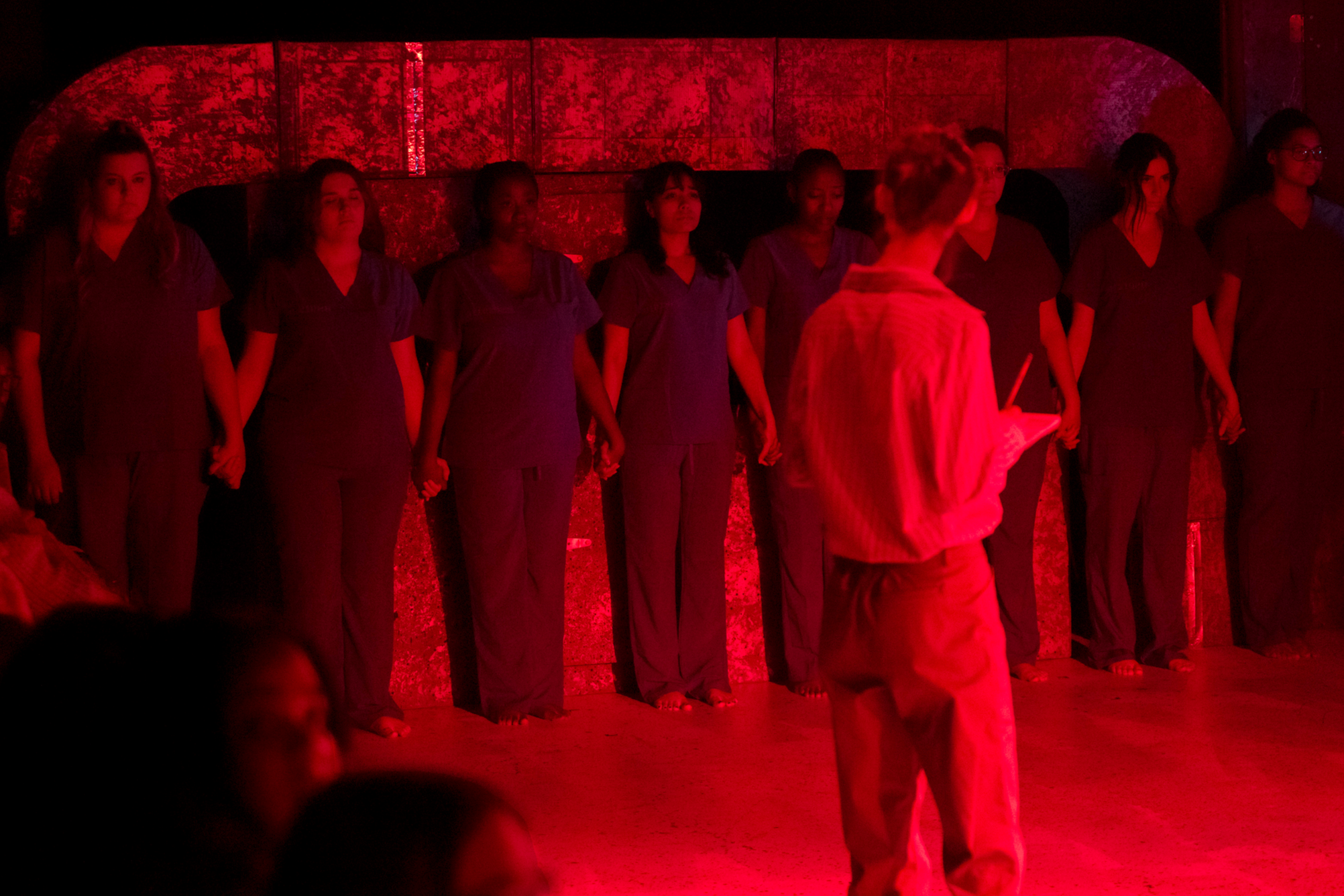
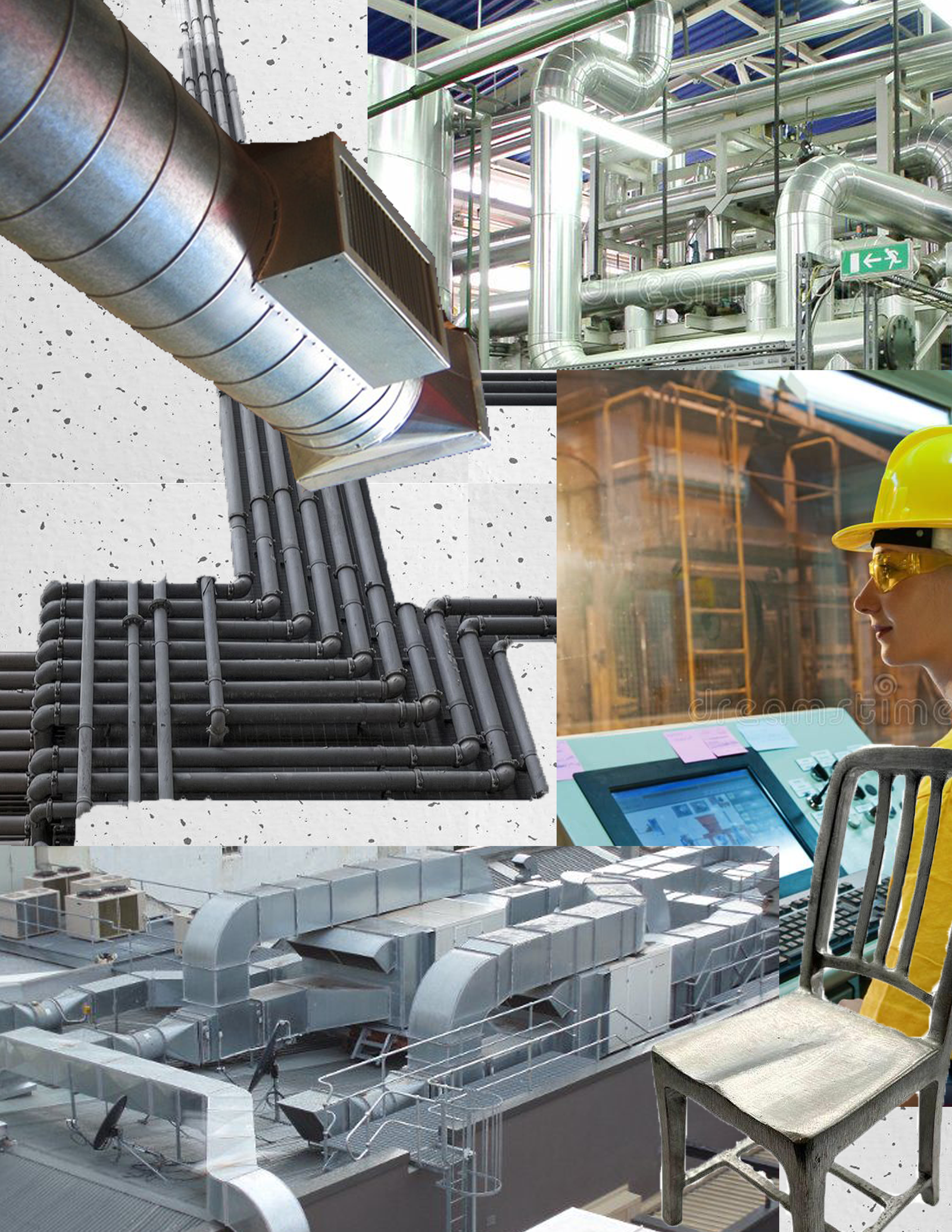
The director envisioned an industrial, mechanical world that emphasized Helen as a cog in a machine. The design needed to show the mounting pressure on her until she ultimately breaks.
Design Goals:
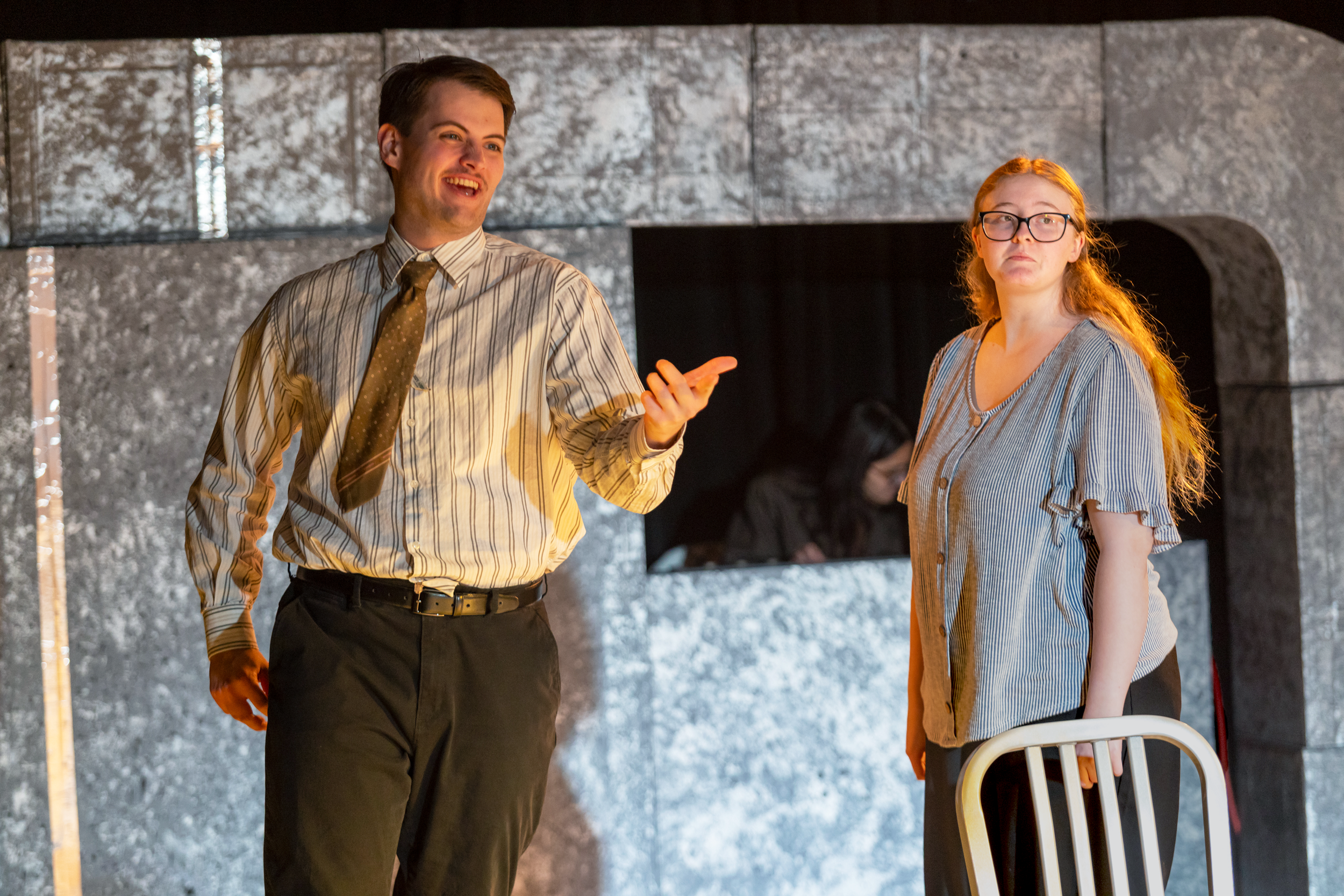
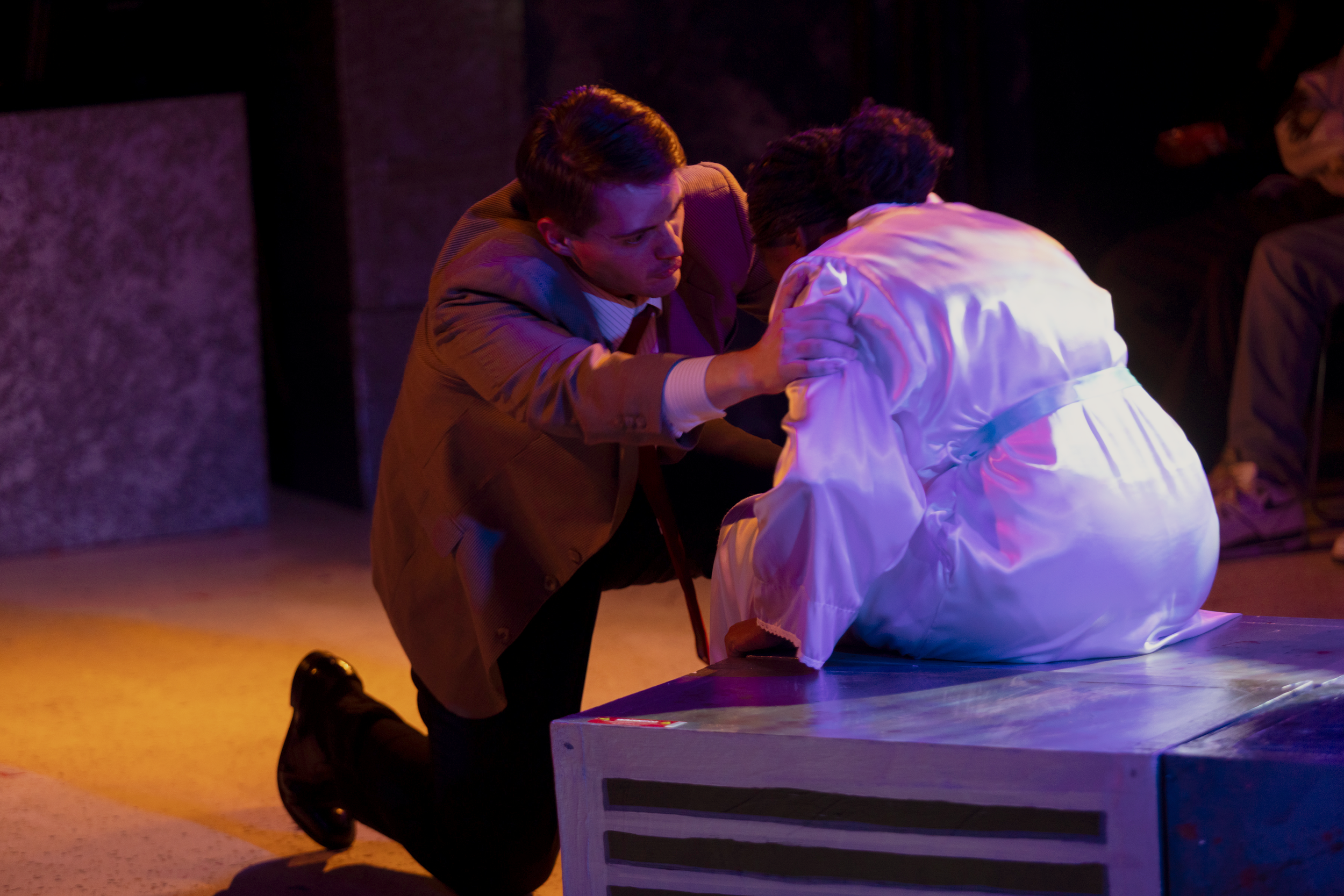
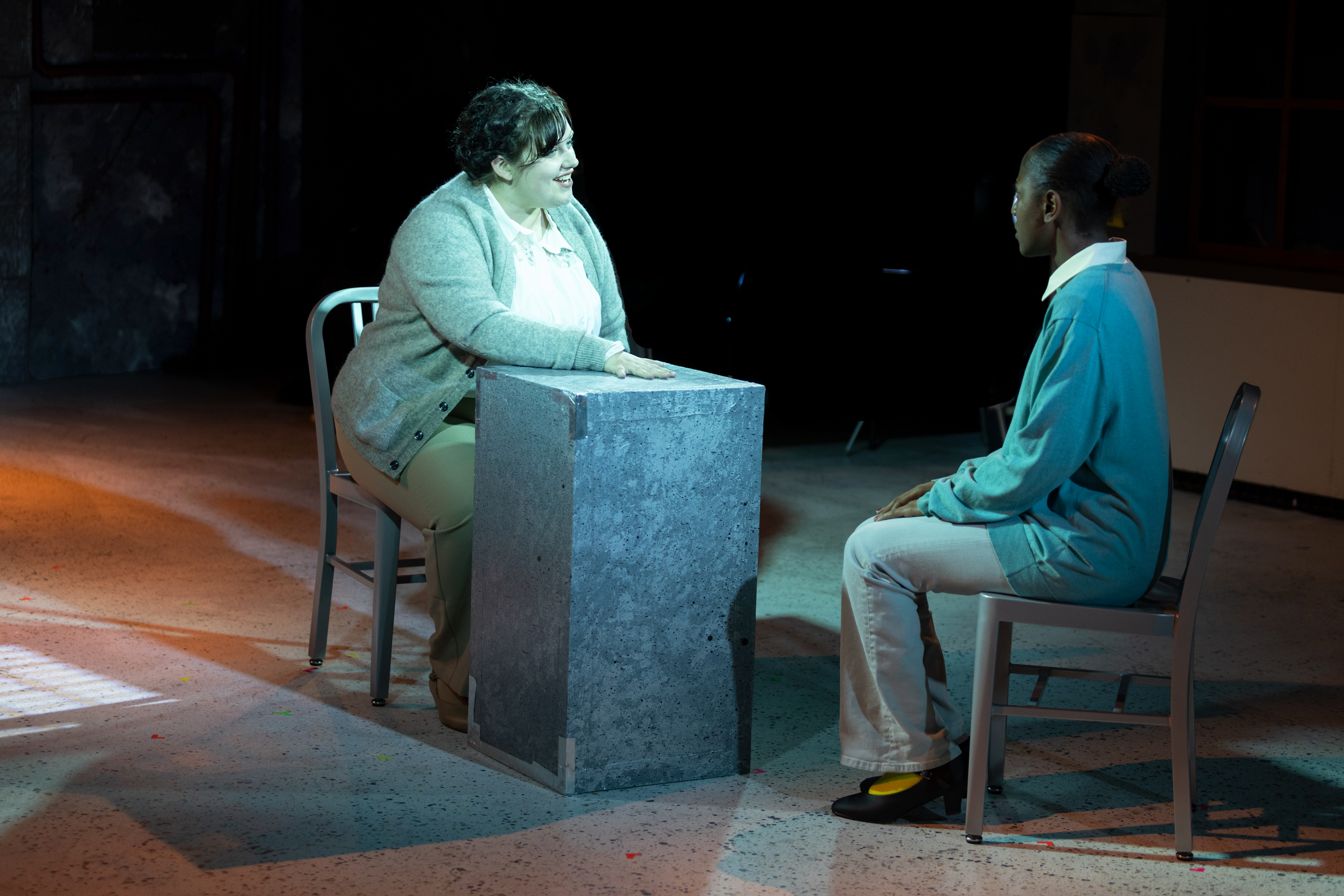
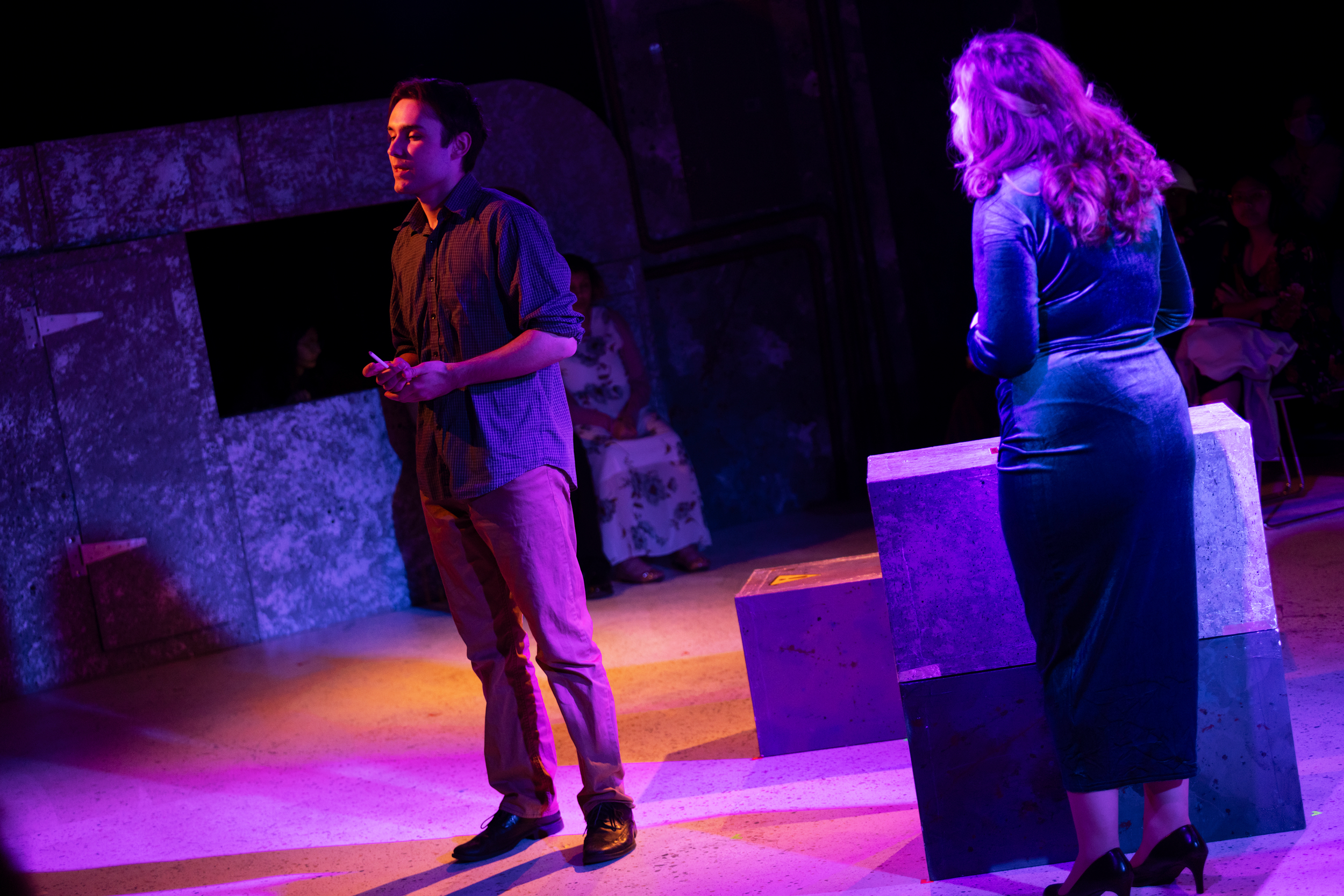
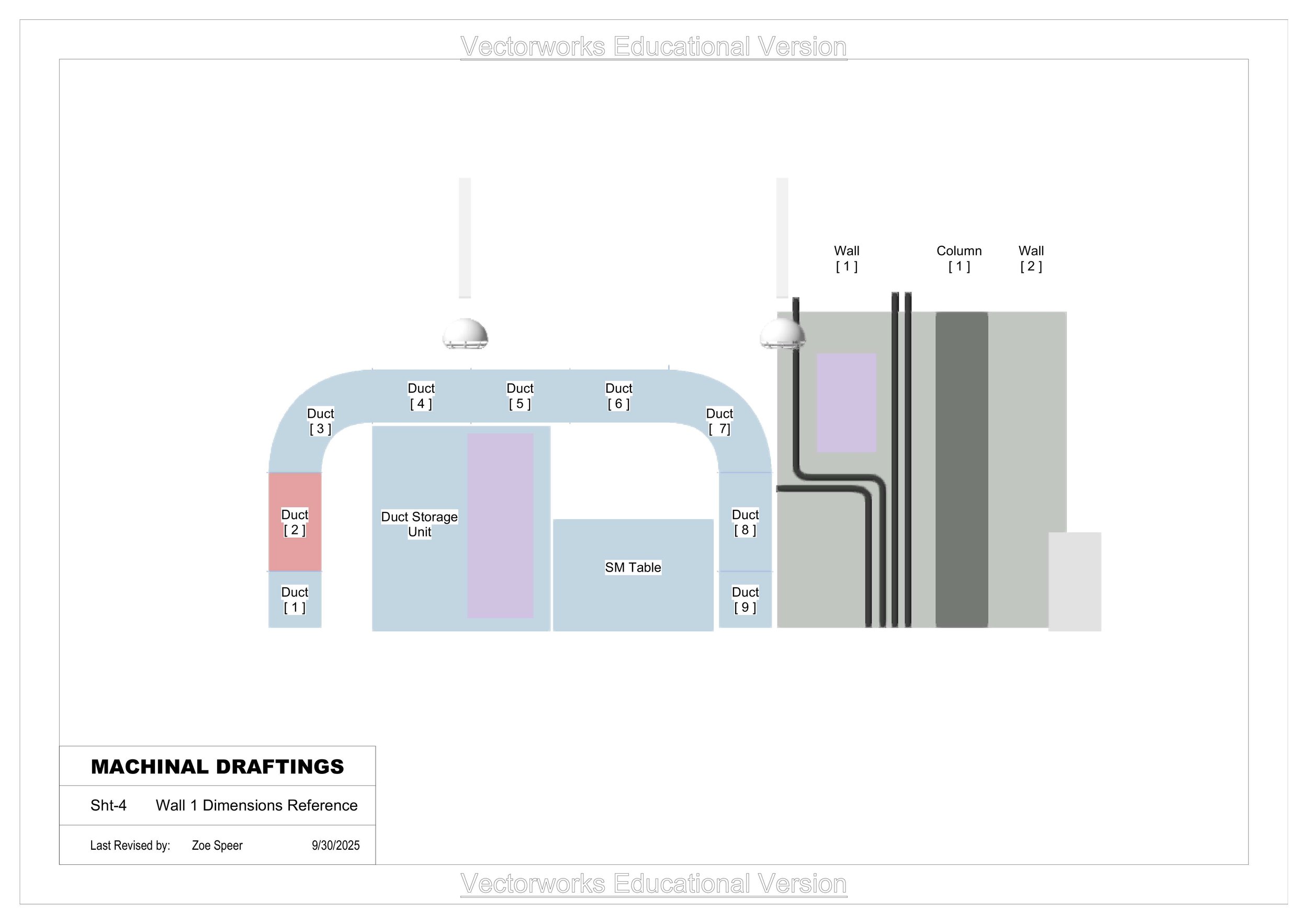
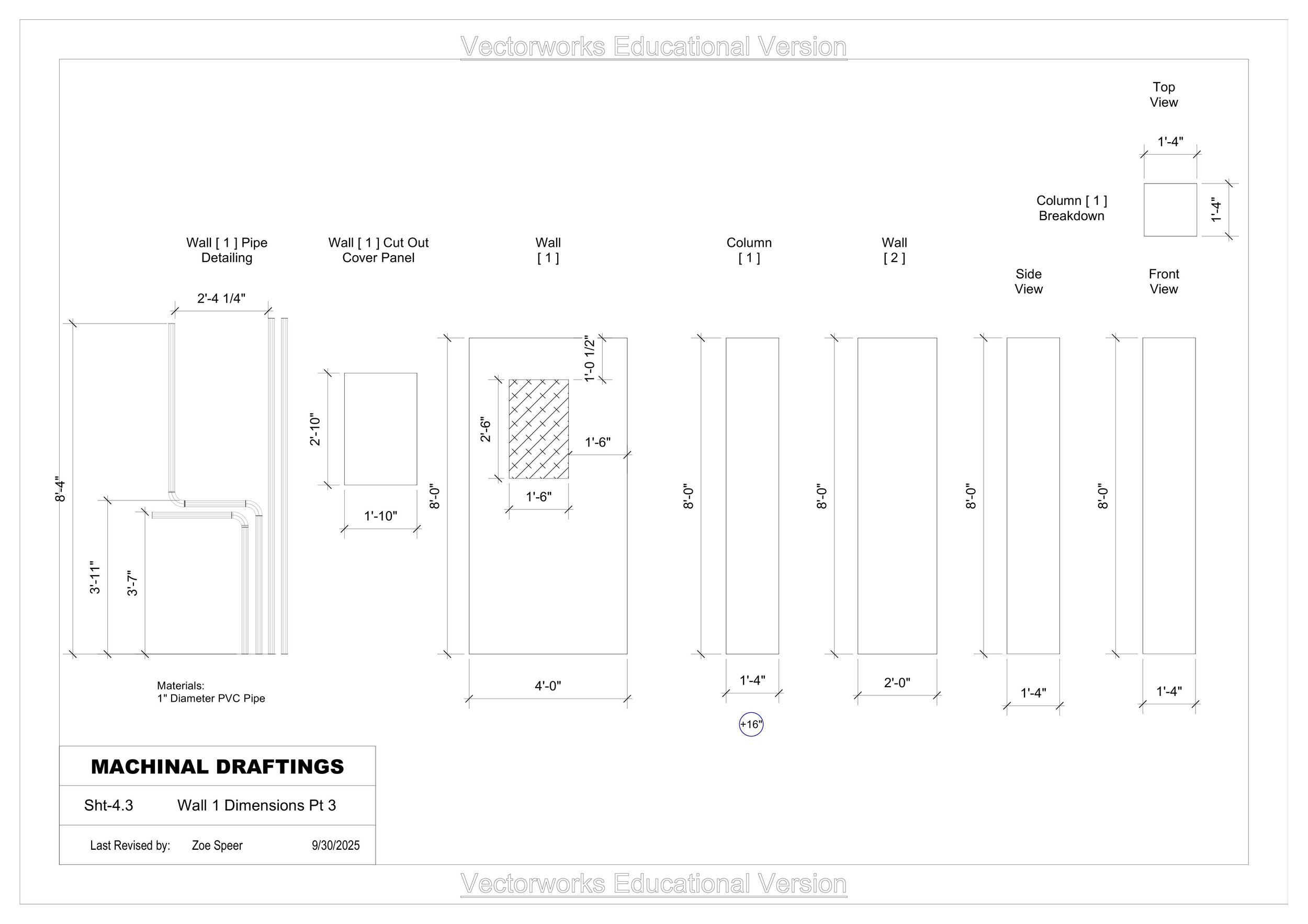
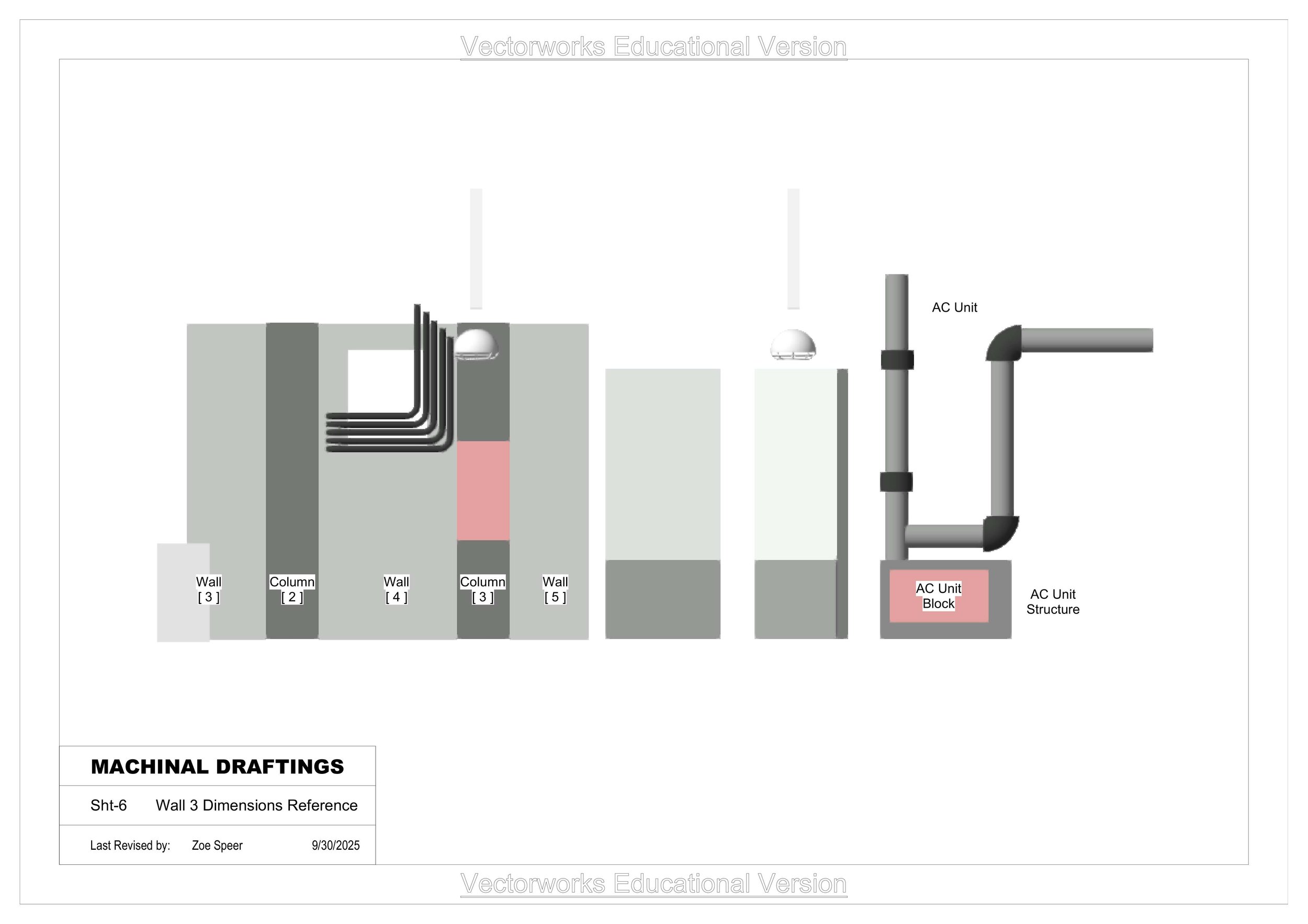
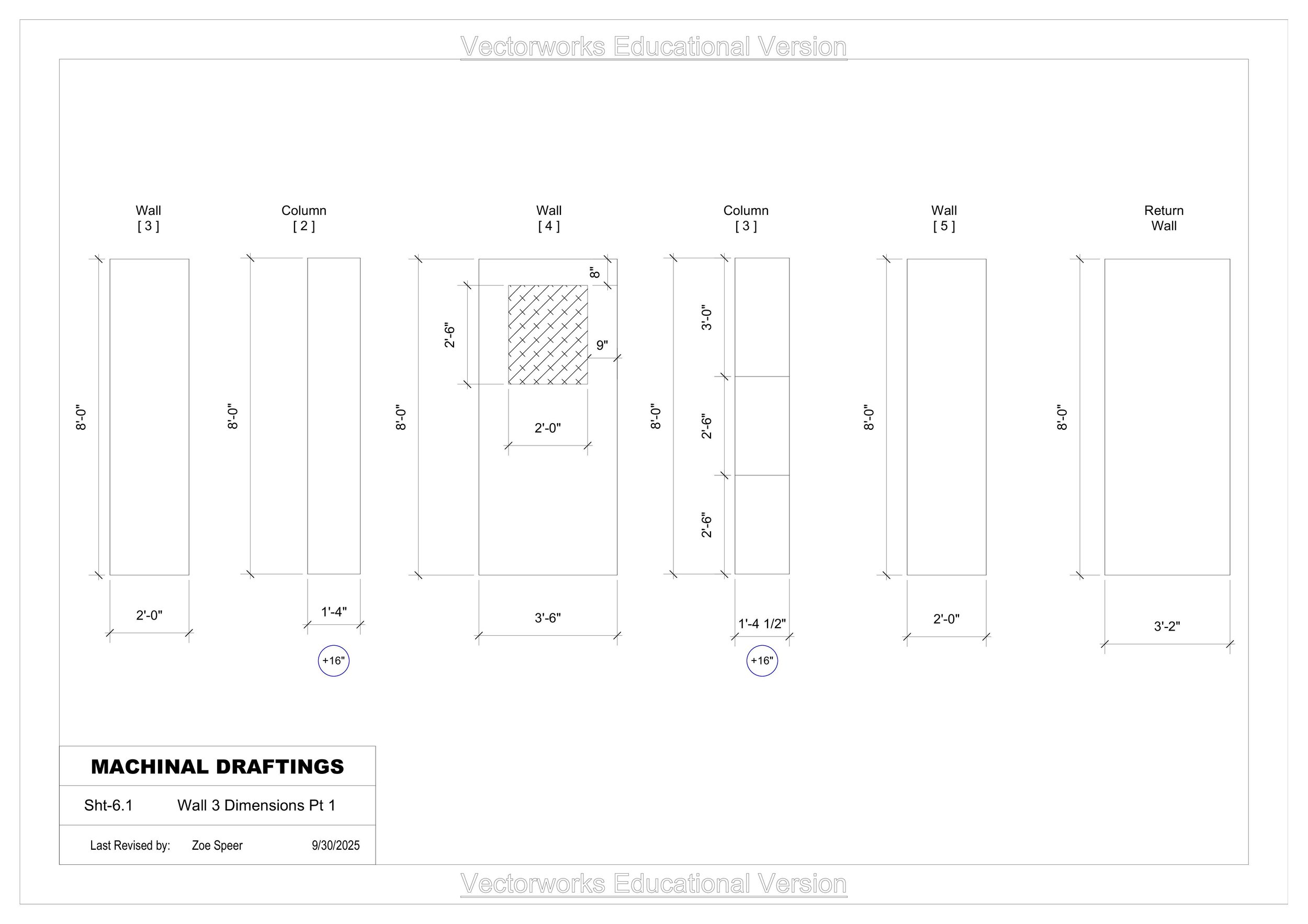
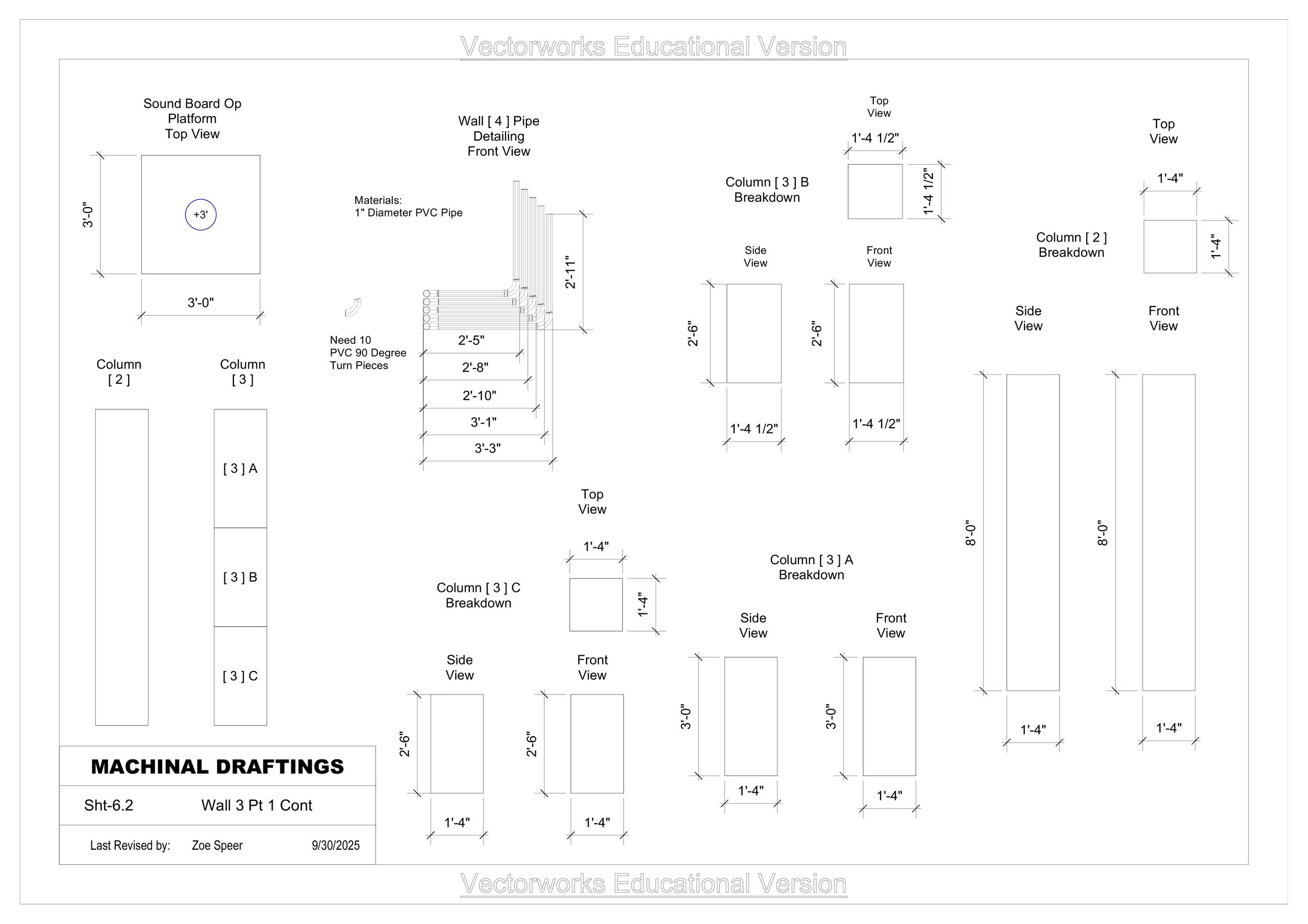
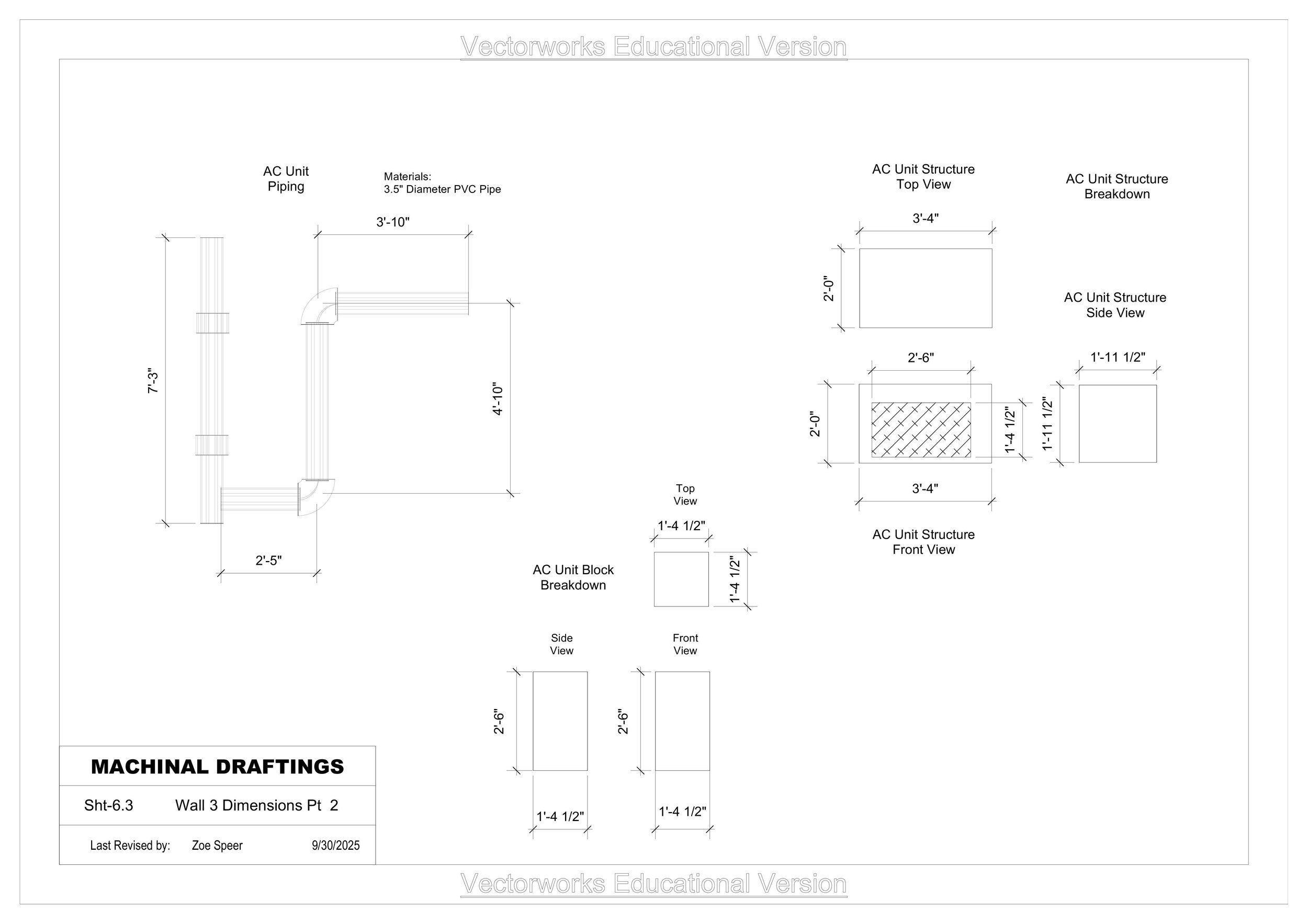
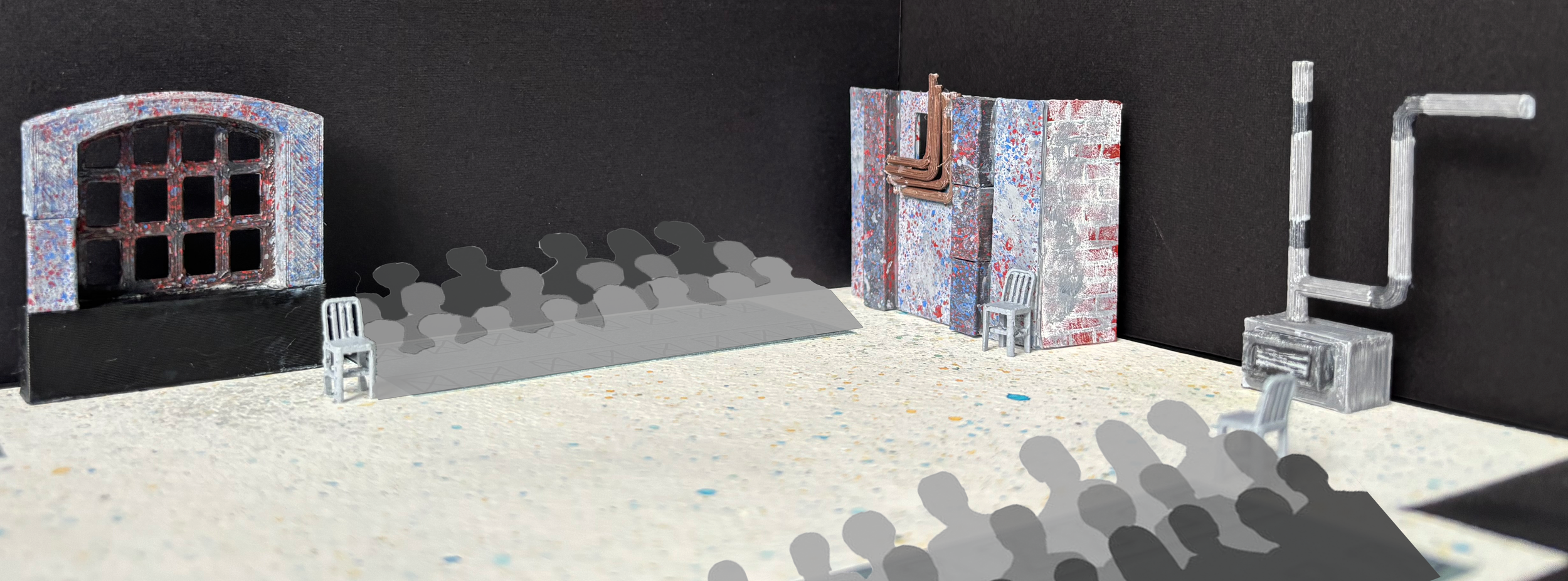
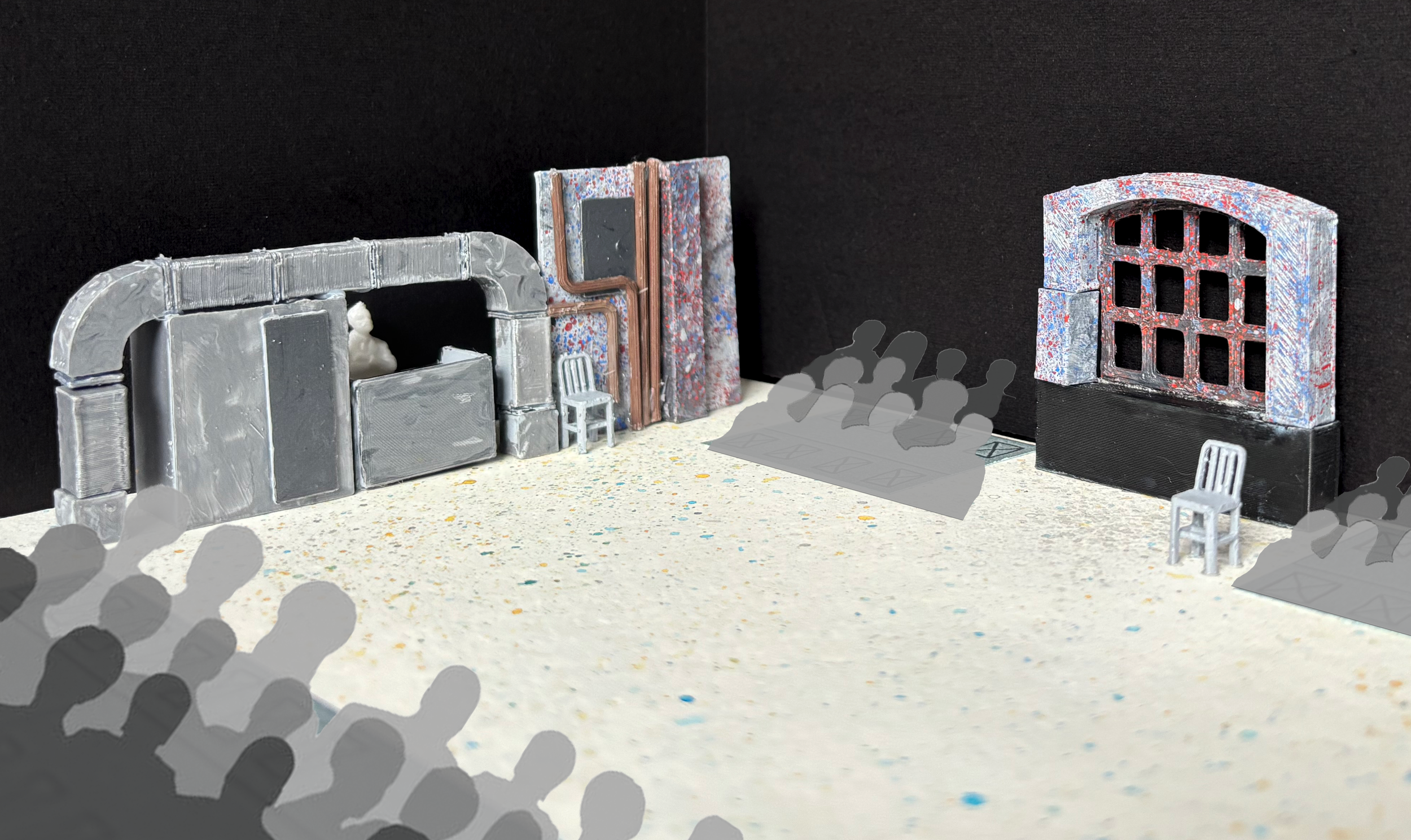
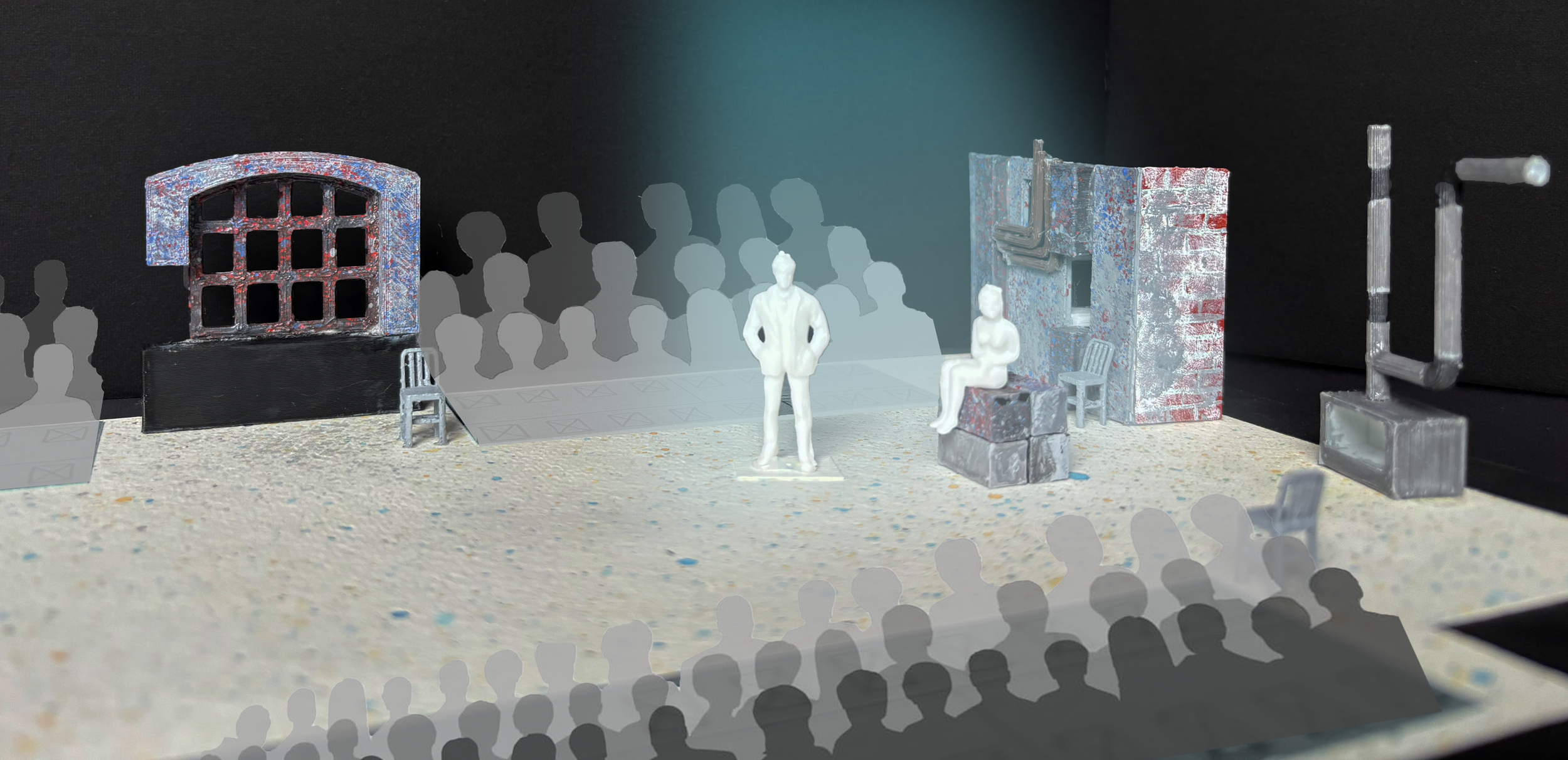
My research focused on industrial spaces where renovated buildings still exposed their structural elements, inspiring the concrete walls, pillars, and exposed ductwork. I wanted concealed scenery that could transform into furniture throughout the production, reinforcing that Helen could never escape the system trapping her. Grounding the environment in realism was equally important, making Helen's experience feel immediate rather than symbolic.
Logistics:
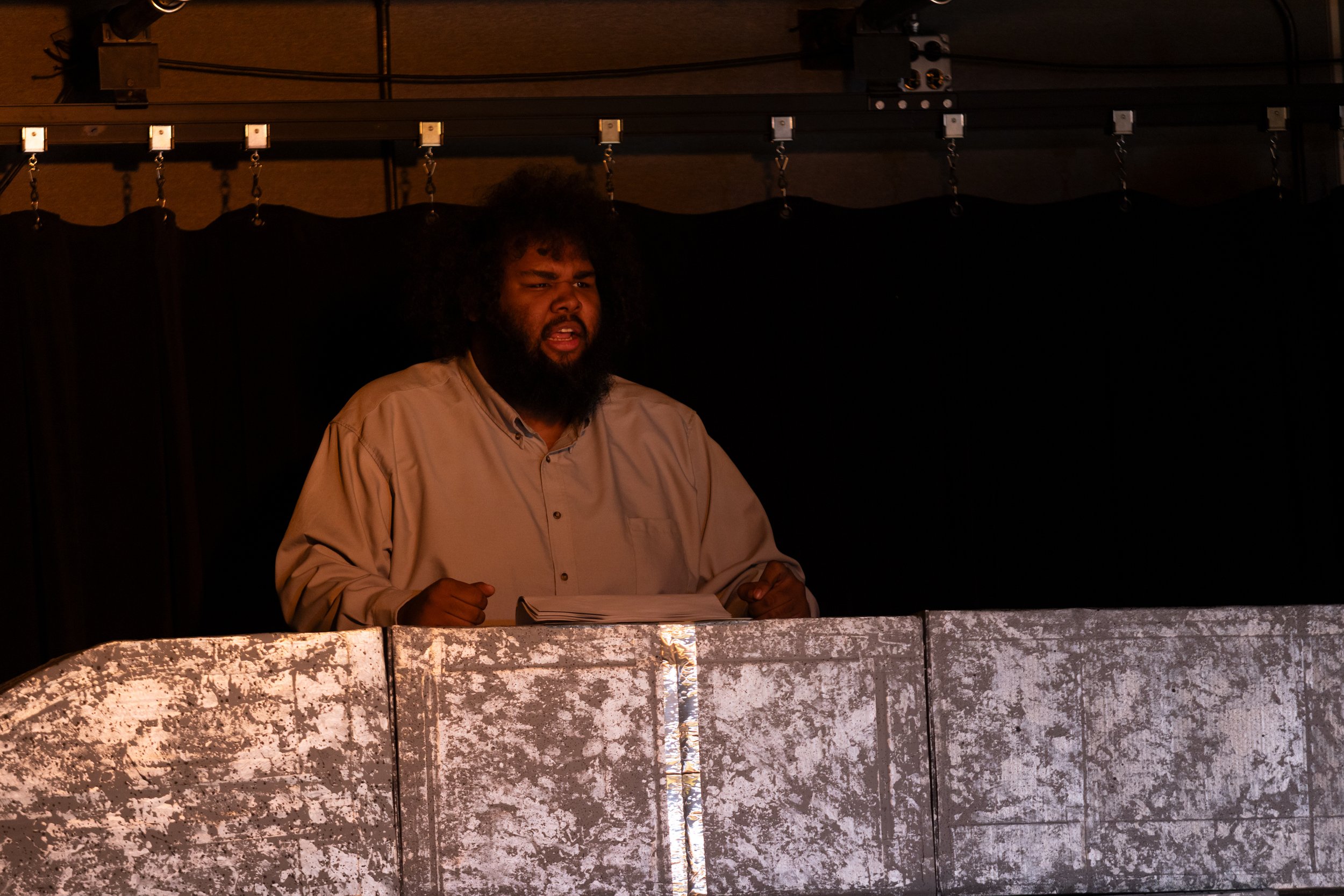
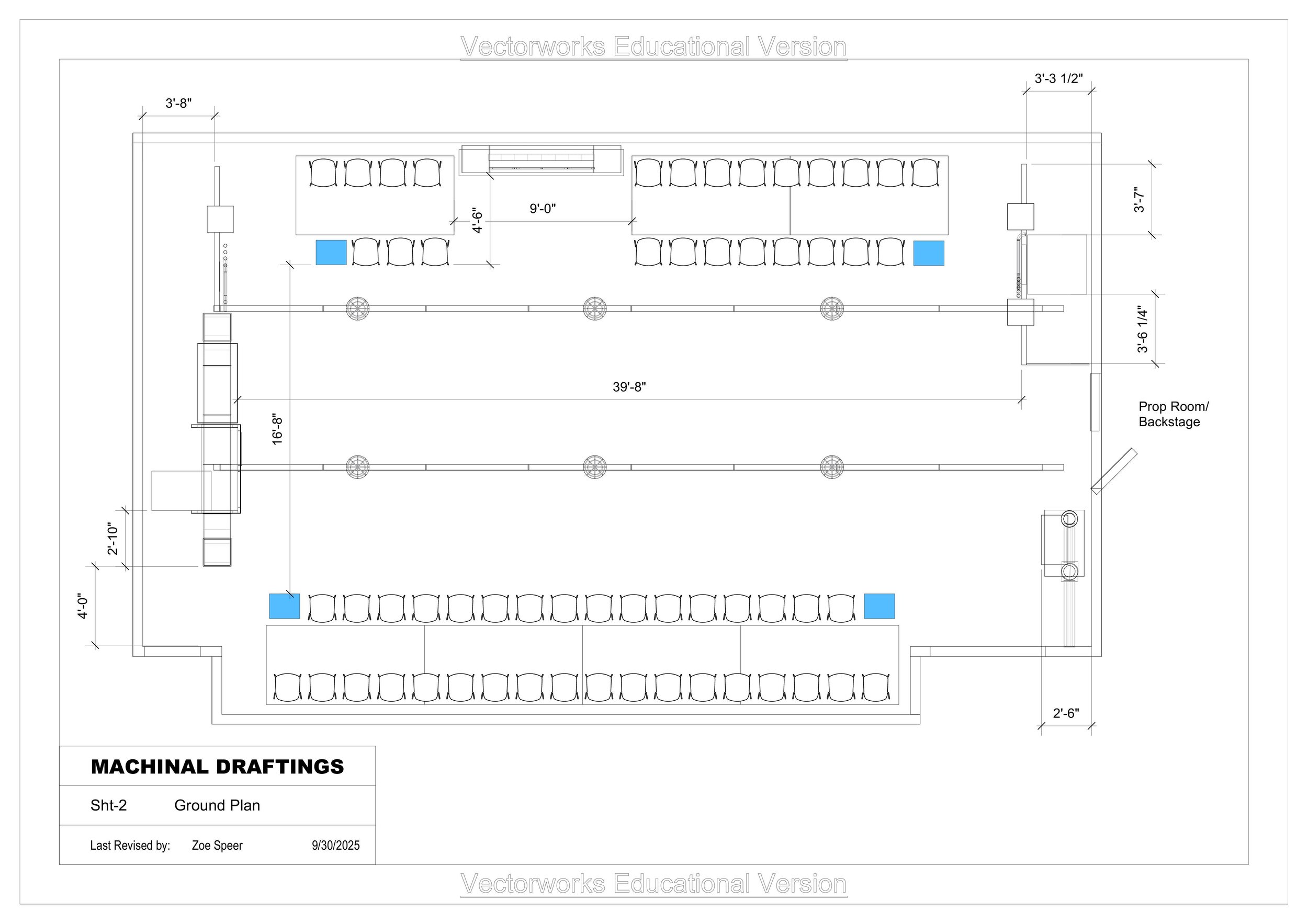
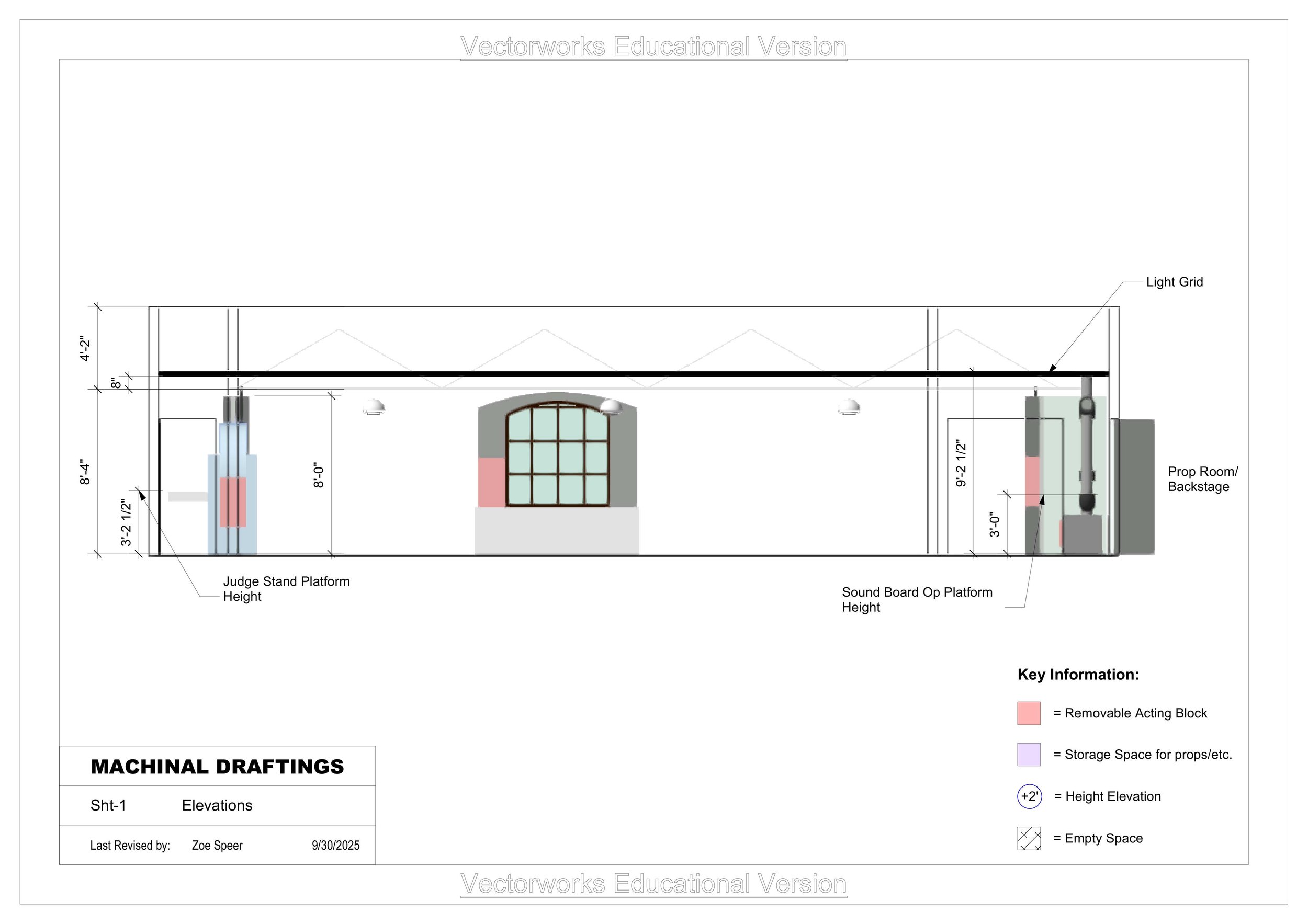
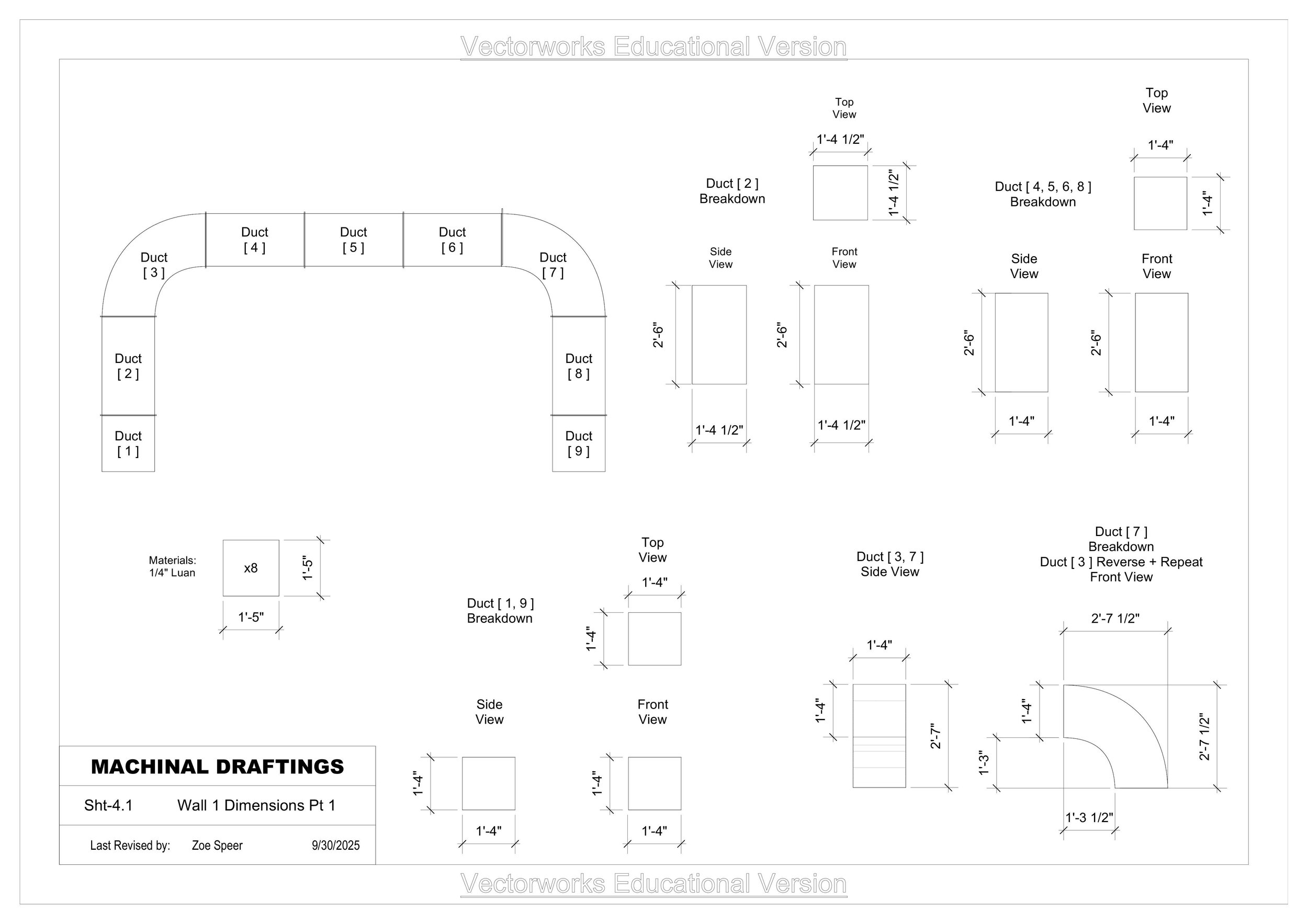
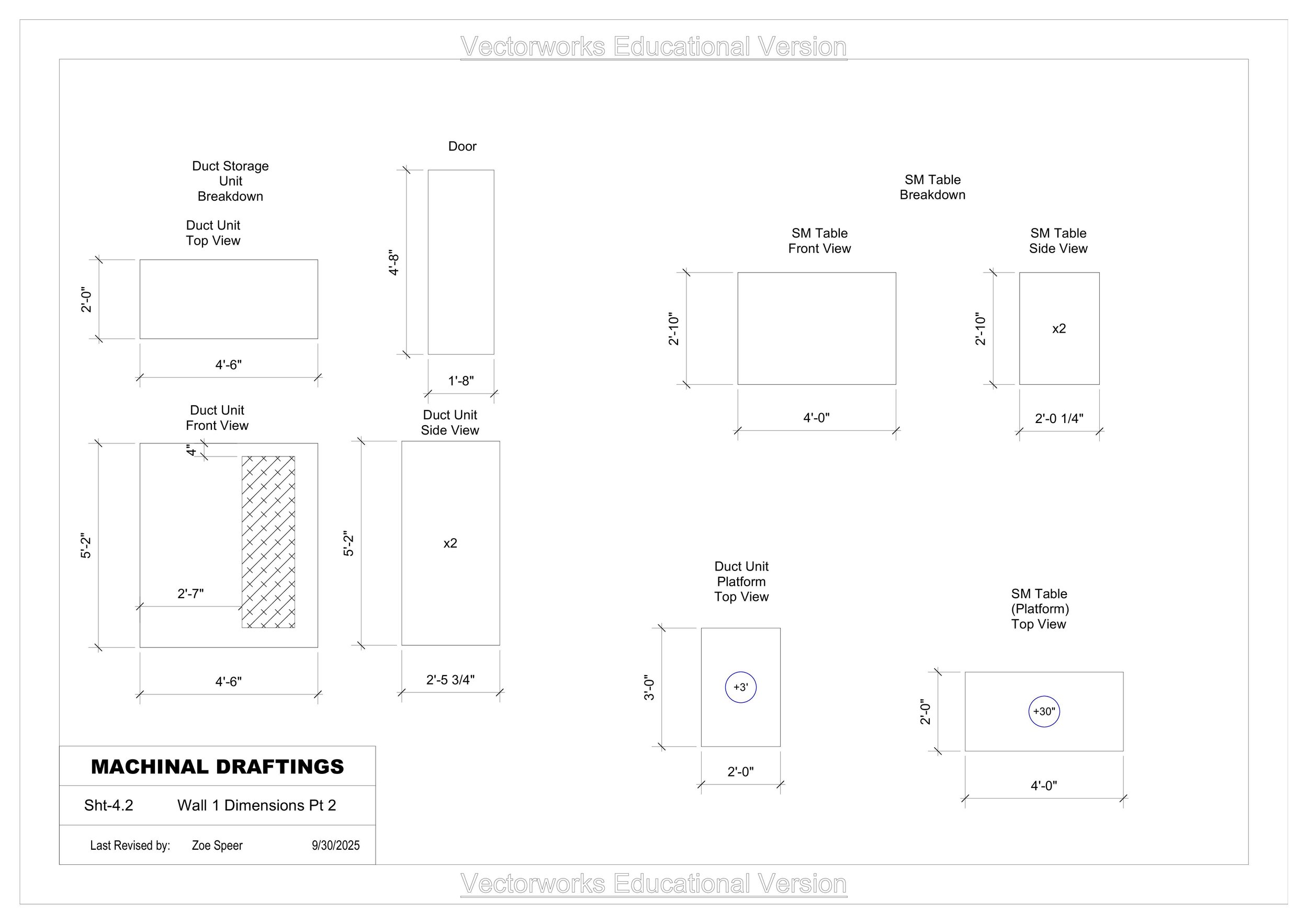
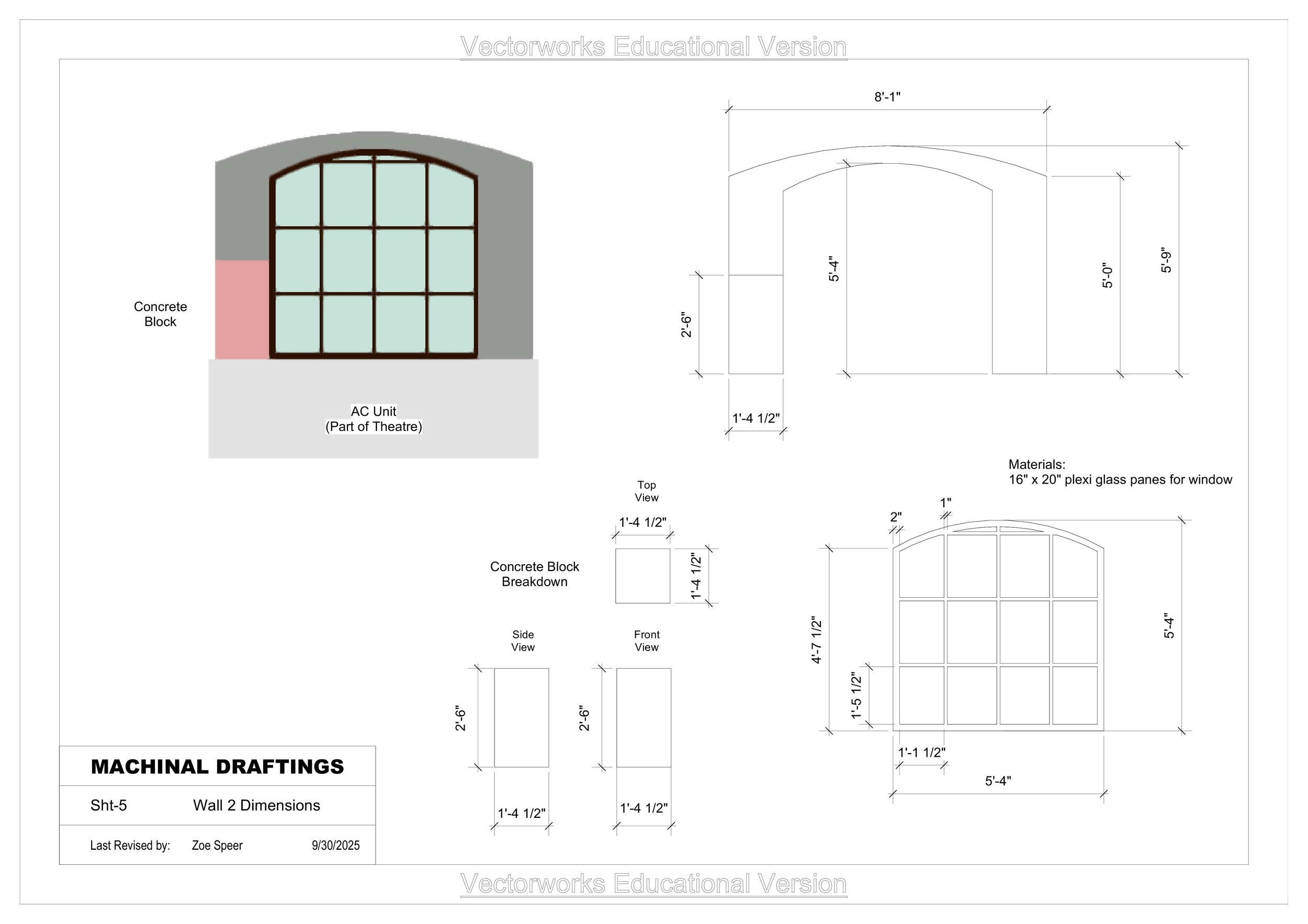
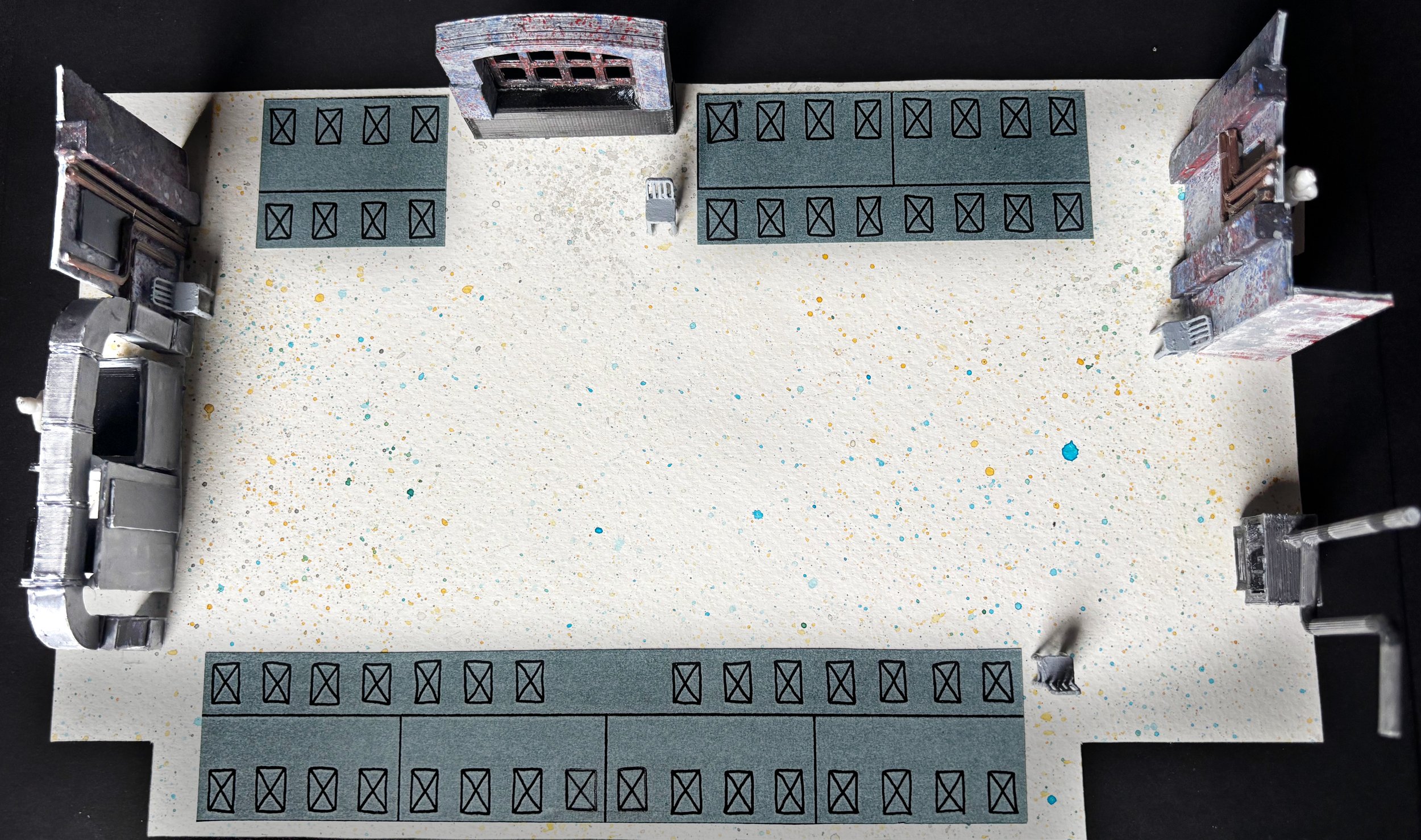
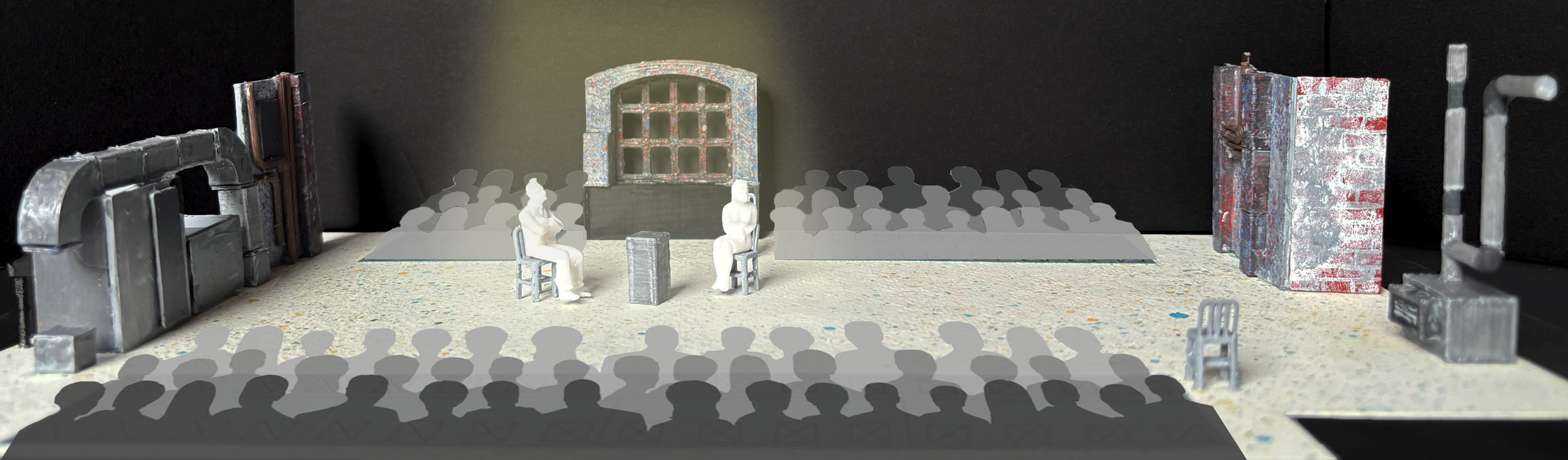
The creative team chose to integrate the stage manager and sound operator into the set. I designed the stage manager's station within a metal duct structure, evoking a factory foreman, while the sound operator worked behind a concrete wall with a viewing window. Because the production used alley staging, the scenery functioned as an environmental setting rather than large center-stage structures, preserving sightlines for both sides of the audience.
Outcome:
The concealed modular blocks created smooth transitions between the play's nine episodes and often surprised audiences when revealed. Integrating the operator stations into the scenery-maintained functionality while reinforcing the industrial aesthetic. Overall, the environmental design created a cold, oppressive, and realistic world that effectively supported the director's vision of Helen's inescapable confinement.